Common Failure of Plow Hydraulic Cylinders: Piston Rod External Leakage and Countermeasures
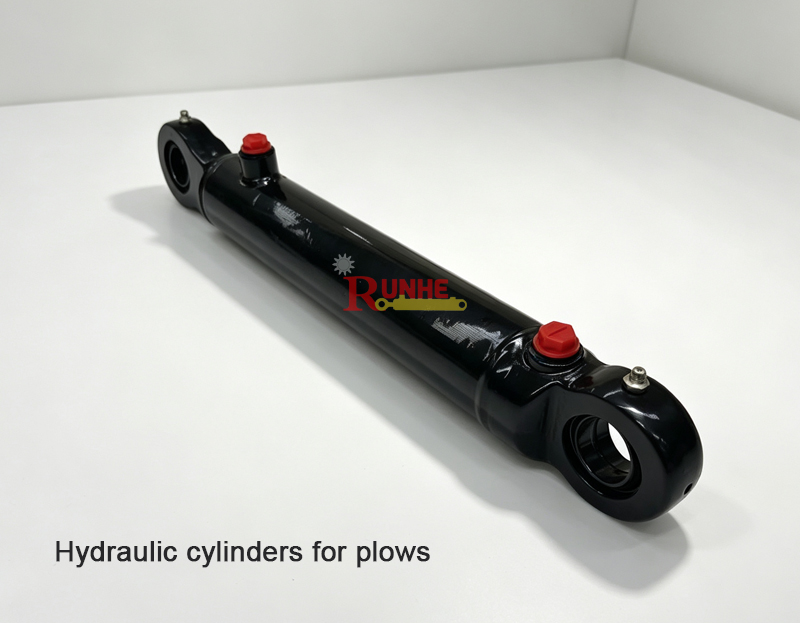
Hydraulic cylinders for plows
In agricultural operations such as deep plowing, tilling, and land preparation, hydraulic cylinders for plows are the core components that control the plow body’s height, angle, and operational load; their stability directly determines the quality of the tilled soil and operational efficiency. Fields are often filled with dust, silt, and gravel, and the equipment is subjected to frequent load shocks, making plow hydraulic cylinders highly susceptible to wear and failure. Among these issues, external leakage from the piston rod is the most common and easily overlooked problem. Most farmers choose to continue operating with this fault, which, over time, leads to problems such as weak plow body lifting, tilting or misalignment, and uneven plowing depth. In severe cases, this can result in the cylinder becoming unusable and delaying the farming season. Drawing on years of experience in agricultural machinery hydraulic systems and maintenance, Runhe has systematically analyzed the causes of this failure, identified daily preventive measures, and developed standardized repair solutions to help users resolve issues cost-effectively and extend the service life of their equipment.
Runhe is a one-stop service provider with deep expertise in the agricultural machinery hydraulics sector, specializing in hydraulic cylinders for plows, repair services, and customized maintenance and operation support. We have a thorough understanding of equipment wear patterns under complex field conditions. The company maintains a year-round inventory of high-quality hydraulic cylinders, original equipment manufacturer seal kits, and compatible accessories compatible with all plow models. It offers a full range of services—including fault diagnosis, equipment maintenance and repair, refurbishment of used cylinders, and model replacements—to precisely resolve all types of plow cylinder operational issues and ensure the smooth operation of large-scale farming operations.
Leakage in the piston rod of a plow’s hydraulic cylinder is primarily caused by harsh field conditions and improper operation. During operation, the piston rod frequently extends and retracts, making it highly susceptible to accumulating hard impurities such as mud, gravel, and straw debris. These particles repeatedly rub against and scratch the seals during the extension and retraction movements, causing the seals to wear out, age, and deform, thereby compromising the cylinder’s sealing performance. At the same time, heavy-load impacts from tilling and collisions or misalignment of the plow body can cause the piston rod to experience eccentric forces and slight bending, which exacerbates wear on the seals on one side and accelerates the occurrence of oil seepage and leakage. Furthermore, prolonged full-load operation during peak farming seasons and excessively high oil temperatures in summer both accelerate the aging and failure of seals, significantly increasing the likelihood of leakage failures. Although this failure may seem minor, it can trigger a chain reaction of problems: minor leaks can cause insufficient system oil pressure, resulting in slow plow body lifting, uneven plowing depth, and incomplete soil turning; severe leaks can lead to hydraulic oil loss and a collapse in system pressure, directly interrupting field operations. At the same time, oil leaks attract contaminants, which accelerate internal wear in the hydraulic cylinders. This can easily lead to severe failures such as cylinder scoring and internal leakage, turning a simple sealing issue into the complete scrapping of the cylinder and significantly increasing maintenance and operational costs.
Regular scientific maintenance is the most effective way to prevent plow cylinder leaks. Runhe has developed a simple and practical field maintenance plan tailored to farmers’ daily operational needs. Before and after each day’s work, promptly wipe away mud, sand, and oil residue from the piston rod surface to keep it clean and smooth, thereby preventing hard particles from wearing down the seals. If you encounter hard soil or rocks during operation, adjust the plow body angle promptly. Never overload the hydraulic cylinder or allow it to extend eccentrically to prevent structural damage caused by excessive stress. Additionally, conduct routine equipment inspections and regularly check the condition of the hydraulic cylinder dust covers; replace them immediately if damaged to prevent dust and moisture from entering the cylinder. Before seasonal operations, check the quality of the hydraulic oil and never use oil that has deteriorated or contains impurities to prevent corrosion and aging of the seals. When the plow is idle for an extended period, fully retract the piston rod into the cylinder to prevent exposure, oxidation, and rust, thereby comprehensively eliminating potential leakage hazards at the source.
For hydraulic cylinders used in plows that are already experiencing piston rod leaks, there is no need to blindly replace the entire unit; professional repairs can quickly restore the equipment’s performance. The standard repair process focuses on replacing the seal kit and adjusting the cylinder for operating conditions. First, the cylinder end caps are disassembled and the piston rod is extracted; then, oil residue and impurities inside the cylinder barrel are thoroughly cleaned, and the piston rod is carefully inspected for damage such as scratches, rust, or bending. If the piston rod is intact, simply replace the entire set of high-quality, wear-resistant seals and dust seals to prevent secondary leaks caused by partial replacements. If the rod has minor scratches, it can be polished and repaired; however, if severe bending or deformation is present, it must be replaced promptly to prevent recurring failures. After assembly, no-load extension and retraction tests as well as high-pressure hold tests must be conducted. The cylinder may only be installed and put into service after confirming that it extends and retracts smoothly, with no pressure loss or leaks. Runhe strictly adheres to the original manufacturer’s process standards when performing repair work and uses genuine, compatible parts. The sealing performance and pressure-bearing capacity of the repaired cylinders are fully suited for the heavy-duty and complex operating conditions encountered in the field.
Scientific troubleshooting and routine maintenance can effectively maximize the utility of hydraulic cylinders for plows, reduce the operational and maintenance costs of agricultural equipment, and prevent resource waste caused by unnecessary part replacements. Runhe combines technical services with product supply, offering not only professional hydraulic cylinder repair and maintenance guidance but also maintaining a full range of brand-new, high-quality hydraulic cylinders for plows in stock—featuring a complete selection of models, reliable quality, and excellent value for money. Customers in need of equipment maintenance, repair, or new machinery procurement can visit our official website to consult on model selection and obtain customized hydraulic solutions and operation and maintenance plans for agricultural machinery.
angle cylinder for meyer plow
replacement snow plow cylinders
western plow cylinder replacement
buyers snow plow cylinder
western snow plow angle cylinders
western plow cylinders
western snow plow cylinders
snow plow cylinders hydraulic