Snow Plough Hydraulic Cylinders | Low-Temperature & Salt Spray Resistant
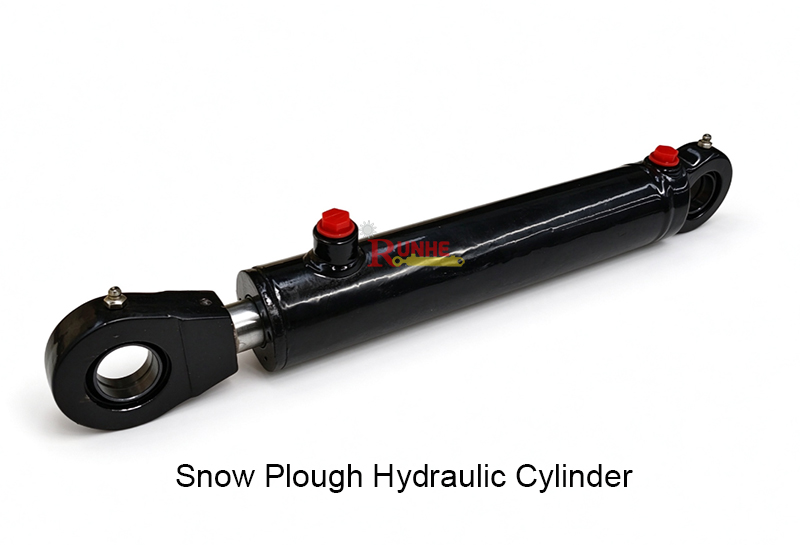
Snow Plough Hydraulic Cylinder
First, Product Overview
The Snow Plough Hydraulic Cylinderis a specialised hydraulic actuator designed for snow ploughs fitted to snow-clearing vehicles; it falls within the category of construction machinery cylinders. It is primarily used to drive the lifting, left-right swivelling and angle adjustment of snow ploughs, operating in winter conditions characterised by low temperatures, ice, snow and salt spray. It is widely used in municipal road snow-clearing vehicles, pick-up trucks fitted with snow ploughs, and environmental sanitation snow-clearing equipment. Unlike the lifting cylinders found on tipper lorries, snow plough cylinders are predominantly double-acting cylinders. They rely on hydraulic oil to push and pull in both directions to raise and lower the plough blade and swing it left and right; they do not rely on self-centring.
Second, Basic Structure
1. Cylinder barrel: High-strength seamless steel pipe with a precision-honed inner wall to withstand alternating pressures; the surface is coated with an anti-rust finish to resist corrosion from de-icing salt.
2. Piston rod: The base material is quenched and tempered, with a chrome-plated surface; high-end models feature a heavy-duty anti-corrosion coating. It must withstand friction from ice and snow and resist corrosion from de-icing brine.
3. Sealing Assembly: Specialised low-temperature seals (polyurethane and rubber composite seals), specifically designed to address low-temperature hardening, ice and snow ingress, and salt spray corrosion. Fitted with robust dust seals to prevent snow and silt from entering the cylinder.
4. Guide Sleeve and End Cap: These support the piston rod and withstand lateral forces;
5. Hinge Ears/Mounting Brackets: Most models utilise a double-ear or single-ear hinged structure, facilitating direct assembly onto the plough frame and accommodating the impact loads generated during snow-clearing operations.
6. Buffering Device: Some models feature a built-in buffer to prevent hard impacts caused by the plough swinging to its extreme positions.
Third, Working Principle
1. Extension: Pressurised oil enters the rodless chamber, pushing the piston rod outwards, causing the snow plough blade to lower or swing to one side;
2. Retraction: Pressurised oil is diverted into the rod chamber, causing the piston rod to retract, lifting the blade or swinging it in the opposite direction.
3. By utilising bidirectional hydraulic force, the height and swing angle of the blade can be precisely controlled, allowing for rapid adjustment of the snow-clearing posture.
Fourth, Main Categories
1. Lifting Cylinder: Controls the overall lifting and lowering of the snow plough, bearing the plough blade’s own weight plus ground impact; it has a relatively larger bore diameter;
2. Swivel Cylinder: Controls the left-right swivelling of the plough blade, adjusts the snow-pushing direction, and enables snow to be pushed to one side of the road;
3. Tilt adjustment cylinder (found on some heavy-duty snow ploughs): Adjusts the pitch angle of the blade to accommodate varying snow depths.
Fifth, Key Product Features
1. Low-temperature resistance: Seals are specifically designed for extremely cold environments; they do not harden or fail at low temperatures, meeting a core requirement for northern winters;
2. Resistance to salt spray corrosion: Road de-icing agents (brine) are highly corrosive; the piston rod plating and the external anti-corrosion coating of the cylinder are key design features;
3. Impact resistance: During snow-clearing operations, the blade collides with ice, manhole covers and stones, requiring the cylinder to withstand frequent impact loads;
4. Compact and lightweight: When retrofitting snow ploughs onto small vehicles (pick-up trucks, light goods vehicles), space for cylinder installation is limited;
5. Responsive operation: Rapid adjustment of the plough blade angle to adapt to road surface changes.
Sixth, Common Faults and Maintenance Points
1. Seal damage and leakage: Ageing at low temperatures and corrosion from de-icing brine are the most common causes; it is recommended to check the piston rod plating before prolonged winter storage.
2. Stuttering operation: Incorrect selection of hydraulic oil, resulting in excessive viscosity at low temperatures; low-temperature hydraulic oil must be used in winter.
3. Piston rod corrosion: Rinse residual de-icing brine from the cylinder surface promptly after operation to prevent pitting corrosion.
4. Pin seizure: Snow and ice accumulation at the articulation points; clear these regularly and apply grease.
Western snow plow hydraulic cylinders
Snow plowing hydraulic cylinders