Research on Hydraulic System Stability and Cylinder Faults in Modern Seeders
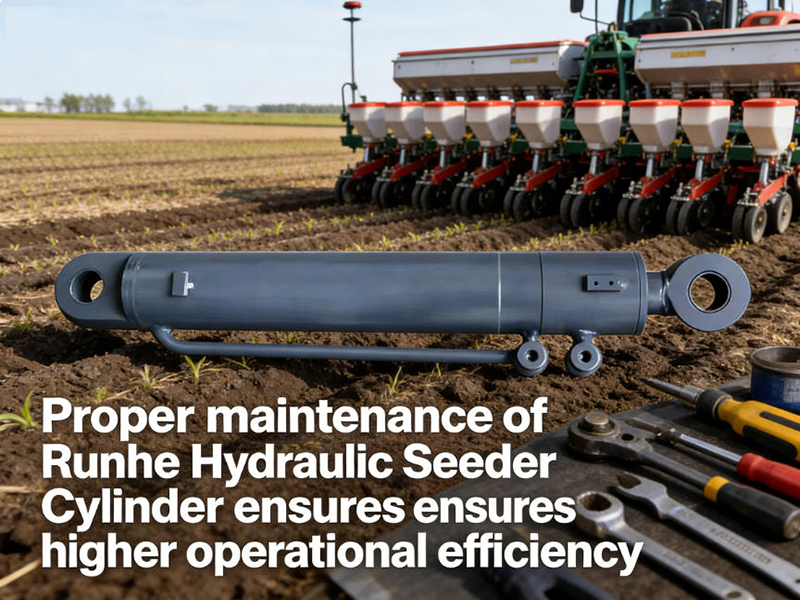
Hydraulic cylinders for seeders
In modern precision agricultural operations, the stable functioning of a seeder's hydraulic system is fundamental to ensuring planting efficiency and quality. As the core component controlling the lifting, lowering, and depth adjustment of individual planting units, the reliability of hydraulic cylinders directly impacts planting schedules and crop yields. We will analyze two common failures encountered in the practical application of hydraulic cylinders for seeders and provide solutions based on professional expertise.
Fault 1: Hydraulic cylinder lifting power failure or slow operation. After operation or when turning at field edges, seeders may experience hydraulic cylinders failing to effectively lift seeding units to transport position, or exhibiting abnormally slow lifting speeds. This is typically caused by two factors. First, inspect whether the entire hydraulic system maintains adequate working pressure and verify the operational status of the main pump, relief valve, and control valve assembly. If system pressure is normal, the issue likely originates within the hydraulic cylinder. Prolonged use causes wear on piston seals, leading to hydraulic fluid leakage from the high-pressure chamber into the low-pressure chamber. This prevents sufficient thrust from being generated, resulting in weak or sluggish performance. Based on deep understanding of agricultural machinery operating conditions, Hebei Runhe Hydraulic Machinery Co., Ltd. manufactures hydraulic cylinder core seal assemblies using wear-resistant materials. These components undergo precision manufacturing and testing to extend seal system lifespan at the source and minimize such internal leakage failures.
Fault 2: Unstable or reduced precision in seeding depth adjustment. During seeding operations, inconsistent row-to-row depth may occur, or hydraulic cylinder response may be sluggish and movement unstable when adjusting depth via the handle. This primarily relates to the operational smoothness of hydraulic cylinders for seeders and system control precision. On one hand, uneven internal friction resistance within the hydraulic cylinder, minor damage to the cylinder bore, or air ingress in the hydraulic fluid can all cause movement irregularities. On the other hand, degraded performance of electro-hydraulic or manual directional control valves regulating seeding depth also impacts flow control precision. Beyond ensuring hydraulic system cleanliness and thorough air purging, the critical factor lies in the manufacturing precision of the hydraulic cylinder itself. HeRun Hydraulics' specialized seed drill cylinders feature precision-honed cylinder bore walls achieving exceptional surface finish and straightness. Piston rod surfaces undergo hard chrome plating for enhanced hardness and wear resistance. This integrated process significantly reduces internal friction, ensuring smooth operation and precise responsiveness even during low-speed fine adjustments. Consequently, it guarantees uniform and consistent seeding depth.
In the complex field operating environment, selecting hydraulics components with reliable design and superior manufacturing is crucial. Leveraging its professional R&D team and advanced manufacturing equipment, Hebei Runhe Hydraulic Machinery Co., Ltd. not only delivers high-standard, long-life general-purpose hydraulic cylinders but also provides customized development in structure, dimensions, and protection features to meet specific OEM requirements. This ensures seamless compatibility and reliable operation with all types of seeders.
hydraulic cylinders for farm equipment
hydraulic cylinders repair near me
hydraulic cylinder size chart pdf
hydraulic cylinders inc
small hydraulic cylinders
hydraulic air cylinders
hydraulic pumps
hydraulic cylinders for log splitters