Analysis of Two Common Failures in Tractor Hydraulic Cylinders
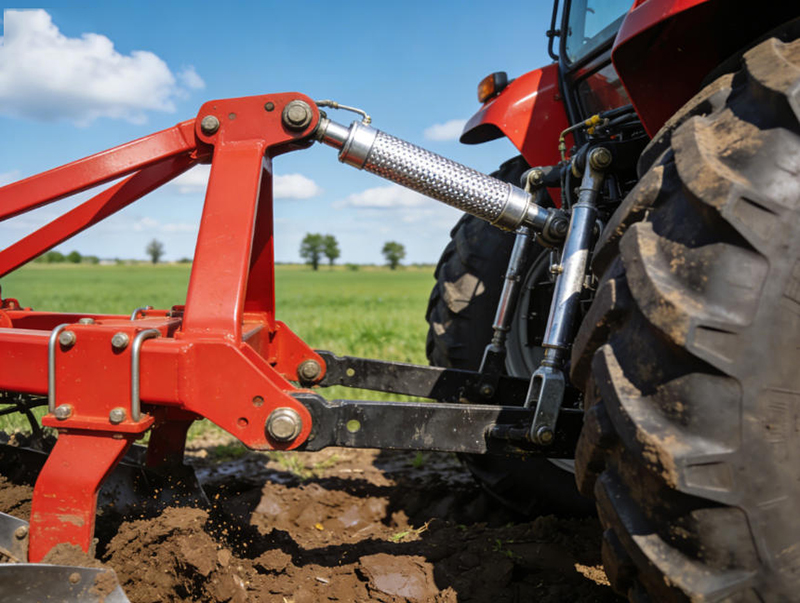
Analysis of Two Common Failures in Tractor Hydraulic Cylinders
When tractors are equipped with various agricultural implements for deep plowing, lifting, and turning operations, tractor hydraulic cylinders serve as core actuators that operate extremely frequently. The demanding reciprocating motion and complex field conditions pose severe challenges to their reliability. Among these, wear-induced fitting failures and stiction caused by prolonged inactivity represent two particularly common yet preventable failures. Accurately identifying their root causes and implementing appropriate countermeasures are crucial for ensuring uninterrupted operation.
1. Failure and Seizure Due to Long-Term Wear
This is the most common progressive failure in tractor hydraulic cylinders, directly impacting their service life.
Failure Symptoms: Initial signs include slowed lifting/lowering speed, insufficient force, or unstable operation of agricultural implements (e.g., reversible plows, harvesting platforms). As wear intensifies, the cylinder may eventually seize completely at a specific position, becoming inoperable. This may be accompanied by hydraulic fluid leakage or abnormal system overheating.
Root Causes:
Piston and Cylinder Bore Wear: Prolonged high-frequency reciprocating motion, combined with potential microscopic contaminants in the hydraulic fluid, gradually wears down the piston's outer sealing rings, support rings, and the smooth inner surface of the cylinder bore.
Seal failure: Worn piston rod seals allow high-pressure oil to leak internally, preventing effective pressure buildup; or permit external contaminants to enter, causing abrasive wear.
Loss of clearance fit: Once wear reaches a certain level, the precise fit is disrupted. Metal components may come into direct contact, experiencing “binding” under lateral forces and eventually seizing.
If seizure or severe pressure loss occurs, do not force operation to avoid further damage. The correct procedure is:
Disassembly Inspection: Remove the cylinder from the equipment and professionally disassemble it in a clean environment.
Damage Assessment: Focus on measuring cylinder bore wear and scratches, as well as piston rod deflection and surface damage.
Repair or Replacement:
If cylinder bore shows only uniform wear or minor scratches, restore precision via honing and replace seals with larger-sized components.
If cylinder bore exhibits severe wear, deep grooves, or piston rod bending, replace corresponding parts or assemblies. Piston seals are wear items and must be replaced as a complete set.
2. Seal Adhesion and Seizure Due to Long-Term Idling
This failure exhibits distinct seasonal patterns, commonly occurring after the off-season.
Failure Symptoms: After months of inactivity, the tractor may fail to operate entirely or require excessive force to start upon restarting. Occasionally, normal operation may resume after initial forceful operation, but seal damage may have already occurred.
Root Cause:
When a hydraulic cylinder remains stationary for extended periods, residual hydraulic oil films between the piston rod and oil seal, as well as between the piston and cylinder barrel, gradually oxidize and gel. This forms sludge-like deposits that cause rubber seals to adhere to metal surfaces, generating significant static friction.
Attempt Gentle Activation: After connecting the hydraulic system, slowly and gently operate the control handle to apply a low-pressure pulse to the cylinder. This can sometimes “break through” the adhesion.
Never Use Force: Absolutely do not strike the piston rod with brute force or repeatedly push the control lever to its limit position for high-pressure impact. This will likely tear or extrude the seals, causing permanent damage.
Disassembly and Cleaning: If gentle activation fails, disassemble the cylinder. Using clean hydraulic fluid or specialized cleaning agents, carefully remove all adhesive buildup from the piston rod, piston, and seal grooves. Inspect seals for deformation or damage caused by sticking; replace if necessary.
Proper Storage Prevention: Before long-term storage during off-season, retract all hydraulic cylinders to their shortest stroke position (to prevent piston rod exposure and rusting). If feasible, periodically start the equipment to allow each cylinder to perform several brief full-stroke cycles, renewing the oil film on contact surfaces.Hebei Runhe Hydraulic Machinery Co., Ltd.: Providing enduring and reliable power assurance for your tractors. The complete resolution of the aforementioned malfunctions relies on precise assessment of damaged components and the supply of high-quality replacement parts. Hebei Runhe Hydraulic Machinery Co., Ltd. specializes in the agricultural hydraulics sector. Our hydraulic cylinders for tractors and repair components offer the following core advantages:
Exceptional Wear Resistance: Cylinder barrels undergo precision cold-drawing and hard chrome plating, while piston rods receive high-frequency quenching and chrome plating. This fundamentally enhances wear resistance and extends service life.
Professional Solutions: We not only provide OEM-quality cylinder assemblies and repair kits but also offer cost-effective recommendations—repair or replacement—tailored to your specific fault conditions, along with expert technical guidance.
When your tractor's hydraulic system experiences weakness or sticking, choosing Hebei Runhe Hydraulic Machinery Co., Ltd's Hydraulic Cylinders for Tractors means selecting a guarantee of efficiency and peace of mind. Let us help ensure your machinery delivers unmatched power for every busy farming season.
aftermarket hydraulic cylinders for sale
aftermarket hydraulic cylinders
hydraulic cylinder suppliers near me
aftermarket hydraulic cylinder replacement
hydraulic cylinder for agricultural machinery
hydraulic cylinder packing near me
rebuild hydraulic cylinder near me
replacement hydraulic cylinder rods